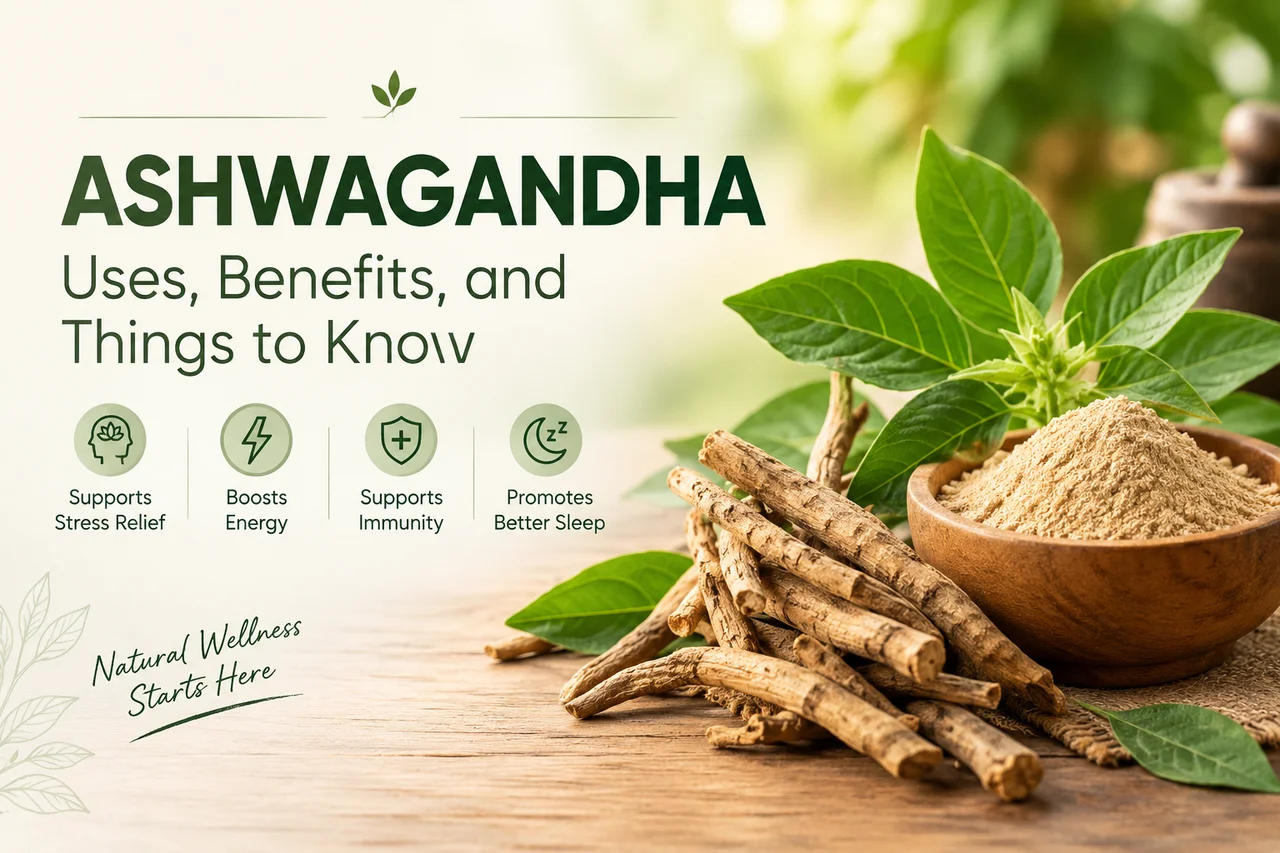
Ashwagandha: Uses, Benefits, and Things to Know Ashwagandha is a popular herbal ingredient that has been used in traditional wellness practices for a long time. Today, it is common
Ashwagandha: Uses, Benefits, and Things to Know
Ashwagandha is a popular herbal ingredient that has been used in traditional wellness practices for a long time. Today, it is commonly found in powders, capsules, extracts, and other herbal products.
It has gained attention because of its possible role in supporting stress management, sleep, and relaxation. However, its effects can vary from person to person, and more research is still needed.
What Is Ashwagandha?
Ashwagandha, scientifically known as Withania somnifera, is a plant traditionally used in Ayurvedic practices. Its roots and sometimes leaves are used to prepare different herbal products.
The herb is often included in modern wellness routines, particularly by people interested in natural approaches to health and relaxation.
Why Is Ashwagandha So Popular?
Ashwagandha has become increasingly popular because many people use it as part of their daily wellness routine. Research has mainly looked at its possible effects on stress and sleep, although results can vary depending on the preparation and person.
Potential Benefits of Ashwagandha
1. May Help With Stress
Some studies suggest that certain Ashwagandha preparations may help reduce stress and support a calmer feeling. However, research is still developing, so it should not be considered a guaranteed treatment for stress.
2. May Support Better Sleep
Ashwagandha has also been studied for sleep. Some research suggests that certain preparations may help improve sleep quality, especially in people experiencing sleep difficulties.
3. May Support Relaxation
Because of its traditional use and research into stress, Ashwagandha is often included in relaxation and wellness routines.
4. Interest in Energy and Physical Performance
Ashwagandha is also marketed in products related to energy, exercise, and physical performance. Some research has explored these areas, but the evidence is not strong enough to treat these effects as established benefits.
How Is Ashwagandha Commonly Used?
Ashwagandha is available in several forms, including:
- Capsules and tablets
- Powder
- Herbal extracts
- Other dietary supplements
The amount and type of Ashwagandha can vary between products, so it is important to follow the product instructions rather than assuming that more is better.
Things to Know Before Using Ashwagandha
Natural does not always mean risk-free. Ashwagandha may cause side effects such as stomach upset, diarrhea, vomiting, or drowsiness in some people.
There have also been rare reports of liver injury associated with Ashwagandha products. Long-term safety is not well established.
People who are pregnant or breastfeeding are generally advised to avoid Ashwagandha. People with thyroid or autoimmune conditions, those preparing for surgery, or those taking certain medicines should talk to a healthcare professional before using it.
Ashwagandha may interact with some medicines, including certain medicines for diabetes, blood pressure, thyroid conditions, seizures, and medicines that affect the immune system or cause sedation.
Choosing an Ashwagandha Product
If you are considering an Ashwagandha supplement, look for a product from a reputable manufacturer and check the ingredient label carefully.
Avoid assuming that a higher dose will provide better results. If you take medicines or have an existing health condition, professional advice is especially important.
Ashwagandha Is Not a Replacement for Healthy Habits
Ashwagandha should not replace the basics of a healthy lifestyle. Good sleep, balanced nutrition, regular physical activity, hydration, and stress-management habits remain important for overall wellbeing.
Final Thoughts
Ashwagandha is a well-known traditional herb that has become popular in modern wellness. Research suggests that some preparations may support stress management and sleep, but evidence for many other claimed benefits remains limited.
If you are thinking about adding Ashwagandha to your routine, choose products carefully and consider speaking with a healthcare professional, especially if you take medication or have a health condition.